Paul Franke · 2 September 2026
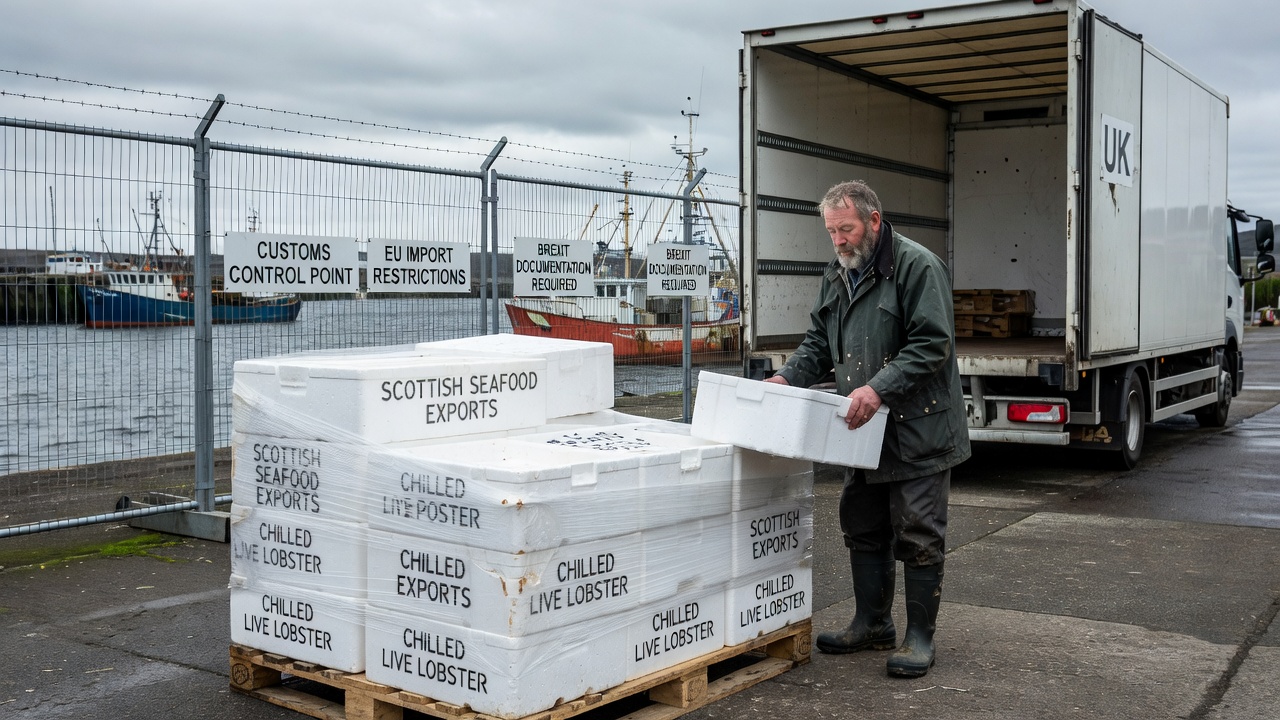
Following the United Kingdom's exit from the European Union, Scottish seafood exporters have faced substantial new barriers to trade with the bloc. Fresh catches including salmon, langoustines and white fish now require detailed customs declarations, veterinary certificates and physical checks that were absent before Brexit. These requirements have raised costs and introduced delays at ports, affecting the viability of time-sensitive shipments to major EU destinations such as France, Spain and the Netherlands.
Effects of New Trade Regulations
Industry data show that export values to the EU fell by around 15 percent in the initial post-Brexit period, with some smaller processors reporting losses of up to 20 percent on individual consignments due to spoilage during extended border waits. Scottish government statistics record a reduction from £500 million in 2019 to approximately £420 million by 2021 for seafood products sent to EU markets. Coastal communities in the Highlands and Islands, where fishing and processing sustain thousands of jobs, have felt the strain most acutely as operators struggle to maintain previous volumes amid higher administrative burdens and reduced competitiveness against EU producers.
Representatives from trade associations note that the added paperwork and inspection regimes have disproportionately affected fresh rather than frozen goods, prompting some firms to limit EU orders or reroute stock to domestic buyers at lower margins.
Efforts to Mitigate Trade Disruptions
In response, exporters are pursuing market diversification toward the United States and Asian countries while investing in improved packaging and extended cold-chain solutions to safeguard quality over greater distances. Calls continue for streamlined digital documentation and further UK-EU agreements to reduce non-tariff barriers. Analysts indicate that although short-term adaptations are underway, the EU's proximity and established demand mean it will remain central to Scottish seafood trade, requiring sustained government support through training and targeted assistance to help businesses adjust to the revised trading framework.