Devon Schmid · 2 September 2026
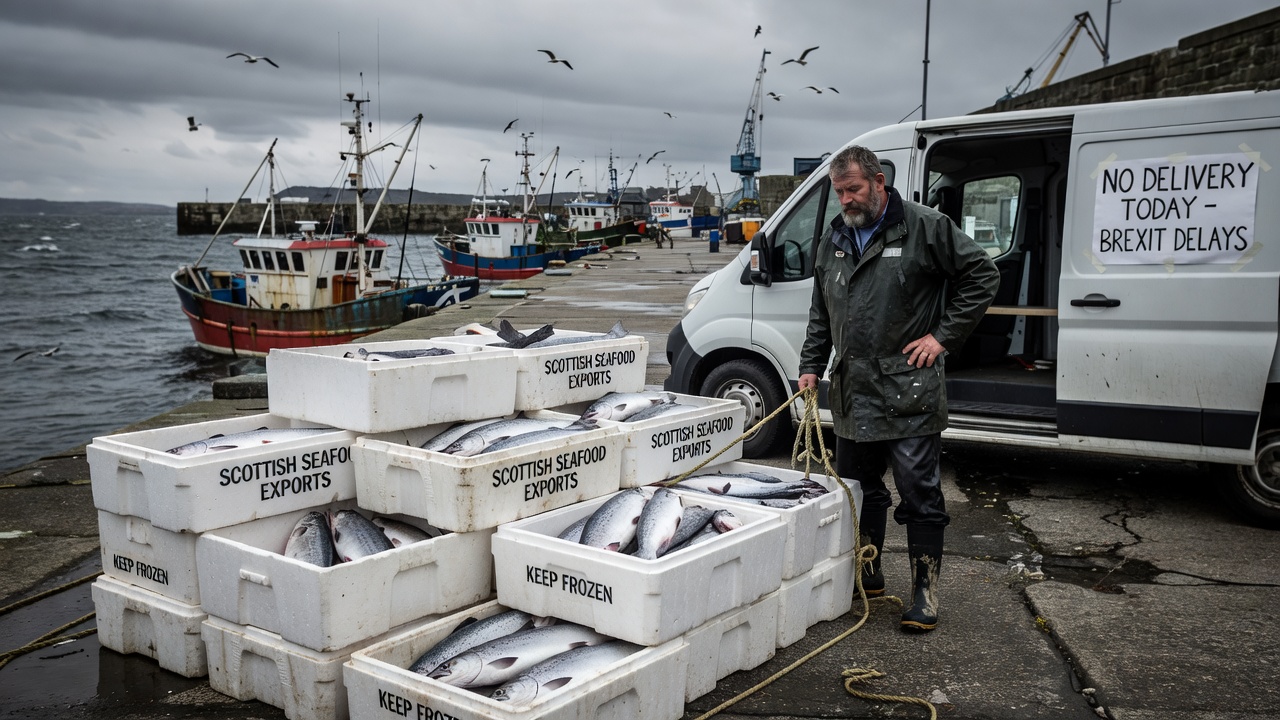
Scottish seafood exporters have encountered mounting difficulties since the UK left the EU single market and customs union. New customs declarations, health certificates and border checks have lengthened transit times and raised costs for fresh produce destined for European markets. Industry bodies report that species such as langoustines, salmon and scallops have been particularly affected because of their short shelf life and reliance on just-in-time logistics.
Export Volumes Show Sustained Decline
Official trade statistics indicate that the value of Scottish seafood exports to the EU fell by 18 percent in the first half of the current year compared with the same period in 2019. Volumes of live crustaceans dropped more sharply, with some processors recording reductions of up to 30 percent. Exporters cite additional paperwork requirements and the need for veterinary inspections at UK and EU borders as primary causes of spoilage and missed market windows. Smaller fishing businesses in the Highlands and Islands have been forced to reduce catches or seek alternative buyers, leading to temporary layoffs in coastal communities.
Retail and catering demand within the UK has not fully offset lost European sales. Domestic prices have softened as supply exceeds local consumption, squeezing margins for producers who previously relied on premium EU contracts. Government support schemes have provided limited relief, covering only a fraction of increased compliance costs.
Industry Adapts Through New Markets and Routes
Some larger Scottish firms have redirected shipments toward the United States, Southeast Asia and the Middle East, where demand for premium white fish and smoked salmon remains steady. These longer-haul routes require investment in advanced cold-chain technology and new regulatory approvals. Trade associations are also lobbying for simplified UK-EU veterinary agreements and mutual recognition of catch certificates to reduce friction at borders.
Analysts note that while diversification offers partial mitigation, the loss of frictionless access to the EU’s 450 million consumers continues to constrain growth. Without further administrative simplifications, the sector faces ongoing pressure on employment and investment in fishing fleets and processing facilities. Scottish Government ministers have called for renewed dialogue with Brussels to address outstanding non-tariff barriers affecting perishable goods.